Extracting & Preserving Donor Grafts During a FUE Hair Transplant Procedure
In Follicular Unit Excision and Extraction or FUE, precision is everything. Each follicle must be carefully removed without damaging its integrity, and the donor area must remain healthy for natural-looking results. At Ziering Medical, this process is handled with a level of accuracy and innovation that sets our procedures apart. Here’s how donor grafts are extracted in a FUE hair transplant procedure:
How FUE Graft Extraction Is Done
1. Donor Area Preparation
The procedure begins by trimming or clipping the donor area so individual follicular units are visible. The area is then cleaned and numbed using local anesthesia. This ensures a comfortable experience while allowing the surgeon to work with complete precision.
2. Extraction Using Micro-Punch Tools
Once prepped, individual follicular units (each containing one to four hairs) are extracted using a specialized circular punch tool, typically less than 1mm in diameter. The surgeon must align the punch perfectly with the natural angle and direction of each follicle to avoid transection (cutting or damaging the hair graft).
At our clinics, all FUE extractions are doctor-led, not delegated to surgical technicians. Our doctors use high-magnification visualization and advanced motorized tools to improve accuracy, reduce graft trauma, and maintain graft viability. This ensures that every follicle harvested has the highest possible chance of survival and growth.
3. Protecting Graft Quality
After extraction, follicles are immediately placed into a specialized preservation solution to keep them hydrated and viable. Our team follows strict protocols to minimize the time each graft spends outside the body, reducing stress on the follicles and improving overall survival rates.
Our extraction process is designed to maintain both the integrity of each graft along with the health and appearance of your donor area. By spacing extractions evenly and strategically, we prevent creating thinned-out zones in your donor area, harming the donor area by overharvesting it, and allowing the donor area to have a natural appearance as the clipped hair begins to regrow after the FUE procedure.
4. Donor Area Healing
Unlike MDEE/FUT (strip) surgery, FUE leaves no linear scar. The micro-punctures made during extraction heal quickly, usually within days, and result in nearly invisible pinpoint scarring. Our approach ensures that the donor area remains strong and healthy, even if future hair transplant procedures are needed to achieve more density or to address progressive hair loss caused by male pattern balding.
Understanding the Safe Donor Zone
The ‘safe donor zone’ is the area of the scalp, typically the mid-back and sides, where hair follicles are miraculously genetically resistant to DHT. These follicles maintain their genetic stability even when transplanted, which is why they’re the foundation of a successful and lasting result.
If follicles are harvested outside this zone, they may eventually thin and fall out. Just like native hair in balding areas. That’s why every great FUE result starts with a clear understanding of the safe donor zone. The surgeon must identify the boundaries precisely for each patient since hair loss patterns vary based on genetics, age, and progression of androgenetic alopecia.
Watch Dr. Craig Ziering explain the importance of properly identifying the safe donor zone during FUE and harvesting grafts in that area:
How to Know If Your Surgeon Overharvested Your Grafts
Overharvesting happens when too many grafts are taken from the donor area, creating visible thinning, patchiness, or scarring. It’s one of the most common and preventable mistakes in FUE when procedures are performed by unqualified clinics or poorly supervised technicians. Here are some signs that your surgeon may have overharvested your donor area:
1. Visible Thinning or Patchiness in the Donor Zone
The first red flag is uneven density across the back and sides of the scalp. The donor area should still appear full and uniform once healed. If it looks noticeably thin, see-through, or “moth-eaten,” it’s likely that too many follicles were taken from the same area or that extractions were concentrated instead of evenly distributed.
2. Irregular or Wide Scarring
FUE leaves tiny circular extraction sites, but if your surgeon uses oversized punches or extracts too densely, those sites can merge or scar visibly. This can make it difficult to wear short hairstyles without revealing the donor area. Our surgeons use micro-punches typically under 1 mm and monitor donor density during the procedure to prevent this kind of damage.
3. Lack of Hair Growth in the Donor Area Months After Surgery
The donor zone should regrow surrounding hair that camouflages the extraction points within a few months. If you still see visible empty patches after 6–12 months, it may mean too many grafts were removed or that the donor region wasn’t properly assessed before surgery.
4. Poor Donor Planning or Technician-Performed Extractions
Many patients who come to us for repair procedures report that their surgeon was not directly involved during extraction. Overharvesting is common in these “hair mill” settings where technicians perform large-volume extractions without evaluating donor limitations.
How to Prevent Overharvesting the Donor Area During FUE Procedure
At Ziering, each patient’s donor area is individually analyzed using high-resolution imaging to identify which follicles are truly permanent and safe to harvest. The goal is to maximize graft yield without compromising long-term density or aesthetics. This requires:
- Even, strategic spacing during extraction to avoid visible thinning or “moth-eaten” patterns.
- Limiting the number of grafts per session based on measured donor density and scalp laxity.
- Avoiding the upper and lower borders of the donor zone, where hair may miniaturize with age.
Ziering doctors follow a mapped extraction plan, ensuring each harvested graft comes from a stable, DHT-resistant region. This balance between science and artistry preserves the donor area’s integrity even after multiple sessions.
Every Graft Counts. Make Sure It’s in the Right Hands.
Your donor follicles are limited. This is true for every hair transplant patient. Once they’re extracted, they don’t grow back in the donor area, which means every graft counts. In some patients, the available donor supply is naturally small, making precision and planning even more critical.
Choosing the right FUE surgeon is the best way to protect your long-term results and the health of your scalp. When your surgeon understands how to manage your donor zone strategically, you’ll get the most density possible while preserving options for the future.
Before committing to a FUE surgery, ask these key questions to ensure your donor hair is in the right hands:
- Is the surgeon board-certified and specialized in hair restoration?
- Does the surgeon personally perform or directly oversee the extraction and implantation phases?
- How is donor density measured and mapped before surgery?
- What extraction tools are used, and how are grafts preserved between harvest and implantation?
- How many grafts does the surgeon recommend, and how did they calculate that number?
- What steps are taken to prevent overharvesting and maintain long-term donor health?
- Can you review before-and-after results from real patients with similar hair types and goals?
- Does the clinic offer long-term planning for progressive hair loss and future procedures?
Book a Consultation with a FUE Hair Transplant Expert.
All Ziering surgeons are board-certified with 75+ years of combined surgical experience and specialize exclusively in hair restoration. Every FUE procedure at our clinics is surgeon-led from start to finish. Come and see for yourself why over 50,000 patients have trusted Ziering Medical to restore their hair and confidence.
Call us or visit a Ziering Medical clinic near you to book a consultation. We serve patients throughout the greater Tri-State area of New York, New Jersey, and Connecticut, as well as the greater Southern California area, from Los Angeles and Beverly Hills to Newport Beach and San Diego. We also offer virtual consultations for patients in or near Salt Lake City, Las Vegas, and West Palm Beach.
FUE Hair Transplant Before and After Photos
A successful FUE hair transplant should look natural and seamless after 12–18 months. The hairline is soft and age-appropriate, the density is even, and the donor area shows no visible thinning. Check out these patients’ confidence-boosting FUE hair transplant transformations.
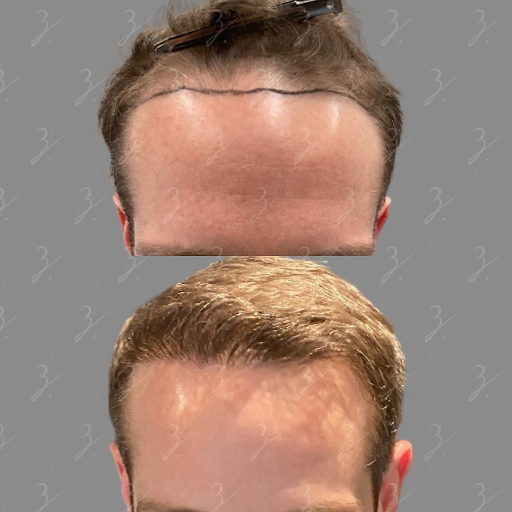
2435 Follicular Units, 1 FUE Hair Transplant, Showing Pre-Op and 12 Months Post-Op
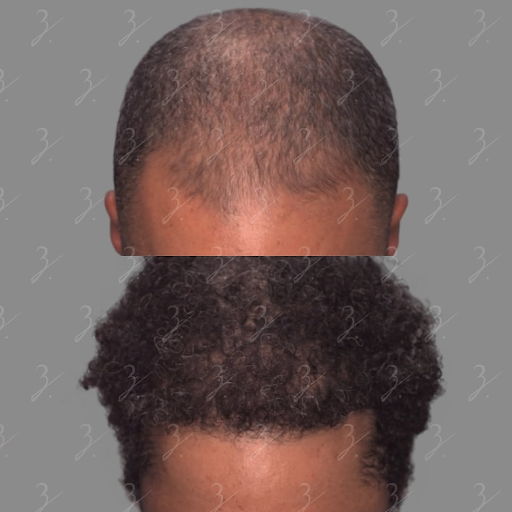
1850 Follicular Units, 1 FUE hair transplant, Showing Pre-Op and 19 Months Post-Op
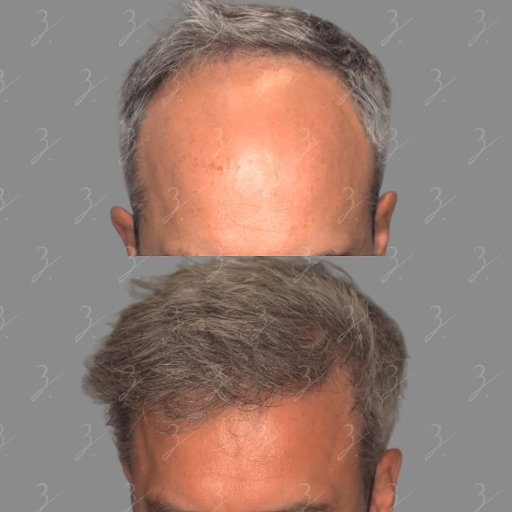
2031 Follicular Units, 1 FUE Hair Transplant, Showing Pre-Op and 12 Months Post-Op