
Are Hair Transplants Permanent?
How long will hair last after a transplant? Are hair transplant results permanent? The short answer: Hair transplants are permanent. The transplanted hair follicles come from areas resistant to balding. Once they’re moved, they keep growing for life.
But permanence doesn’t always mean your hair will stay exactly the same forever. Non-transplanted or native hair around the transplant can still thin, and long-term results depend on your surgeon’s skill, your age, and how you manage future hair loss.
In the following article, we discuss what “permanent” really means in hair transplantation, how long results last, and what you can do to protect your results.
Factors That Affect Hair Transplant Permanence
The permanence of a hair transplant depends heavily on the surgeon’s expertise. Even though donor hairs are resistant to DHT, they won’t survive if they’re mishandled. Poor extraction, long exposure outside the body, transection during dissection, incorrect placement, or packing the grafts in too closely together can kill grafts before they take root. Overharvesting from the donor zone can also leave permanent thinning and limit options for future procedures.
Hairline design is also essential. A hairline that’s set too low may look fine at first but won’t age well as surrounding hair continues to thin. Skilled surgeons plan for long-term permanence by creating a natural, mature hairline and implanting hairs in the right angle, direction and orientation. They also use single-hair grafts in the very front of the hairline followed by 2, 3 and 4 hair grafts as they work behind the hairline. This results in a soft, natural looking hairline.
Clinics that rely on unqualified technicians risk lower graft survival, scarring, or infections, all of which compromise lasting results. Choosing an experienced, board-certified surgeon is the single most important factor in making sure that your transplant will last a lifetime.
Real Permanent Hair Transplant Results
FUE and MDEE/FUT techniques offer permanent solutions to hair loss. During your consultation, your Ziering surgeon will evaluate your hair loss and donor area, discuss your goals, and recommend which technique will give you the best results.
Our board-certified surgeons bring more than 75 years of combined surgical experience in FUE and MDEE/FUT hair restoration, with over 100 million grafts transplanted and more than 50,000 successful procedures. Our natural-looking results and commitment to patient care set us apart as one of the premier hair transplant clinics in the U.S. See more of these life-changing results in our results gallery.
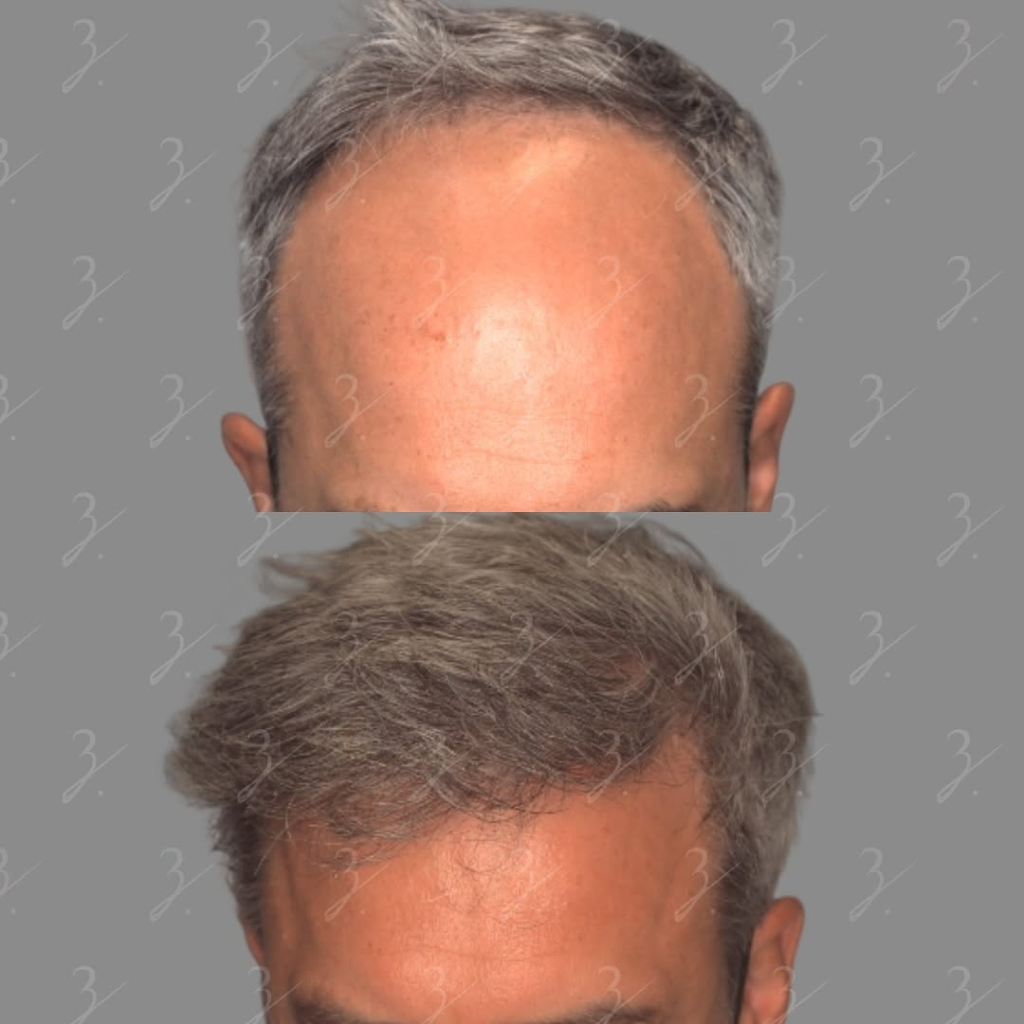
2031 Follicular Units, 1 FUE Hair Transplant, Showing Pre-Op and 12 Months Post-Op
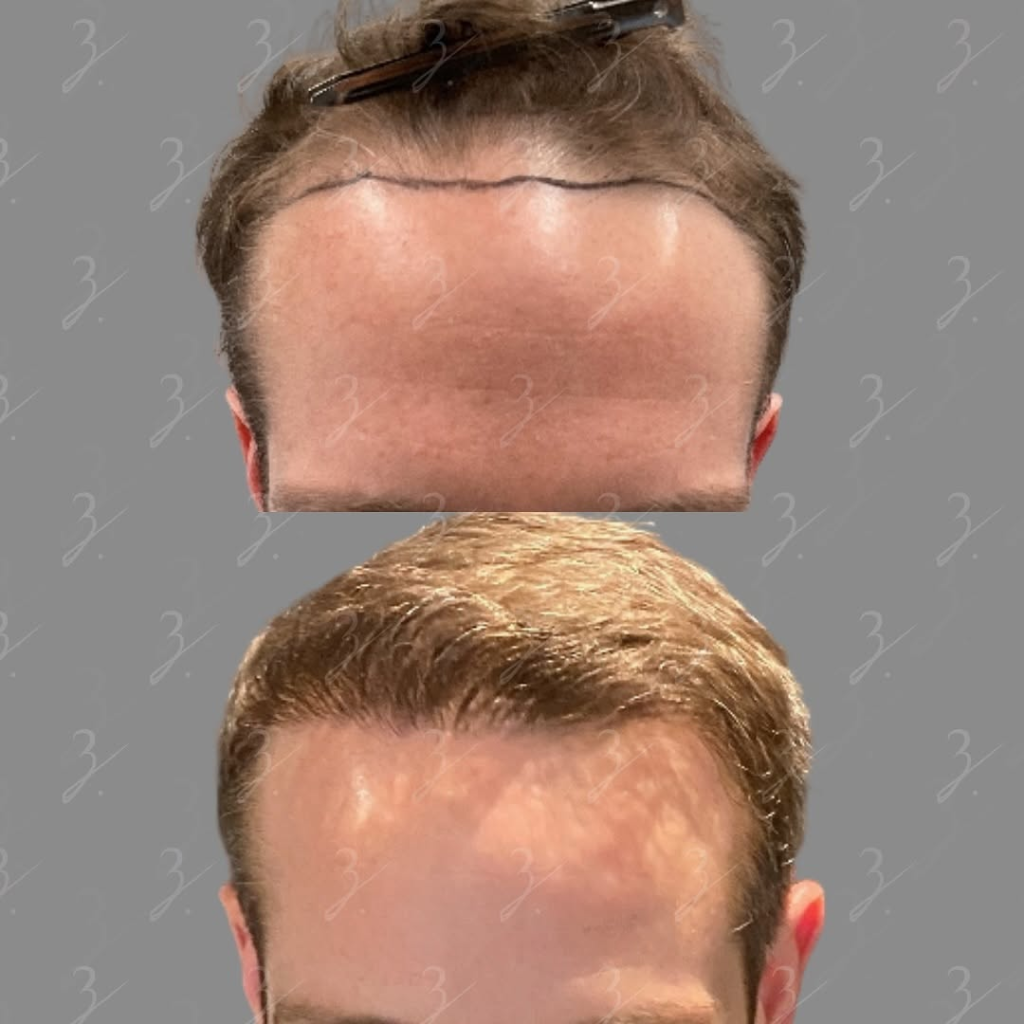
2435 Follicular Units, 1 FUE Hair Transplant, Showing Pre-Op and 12 Months Post-Op
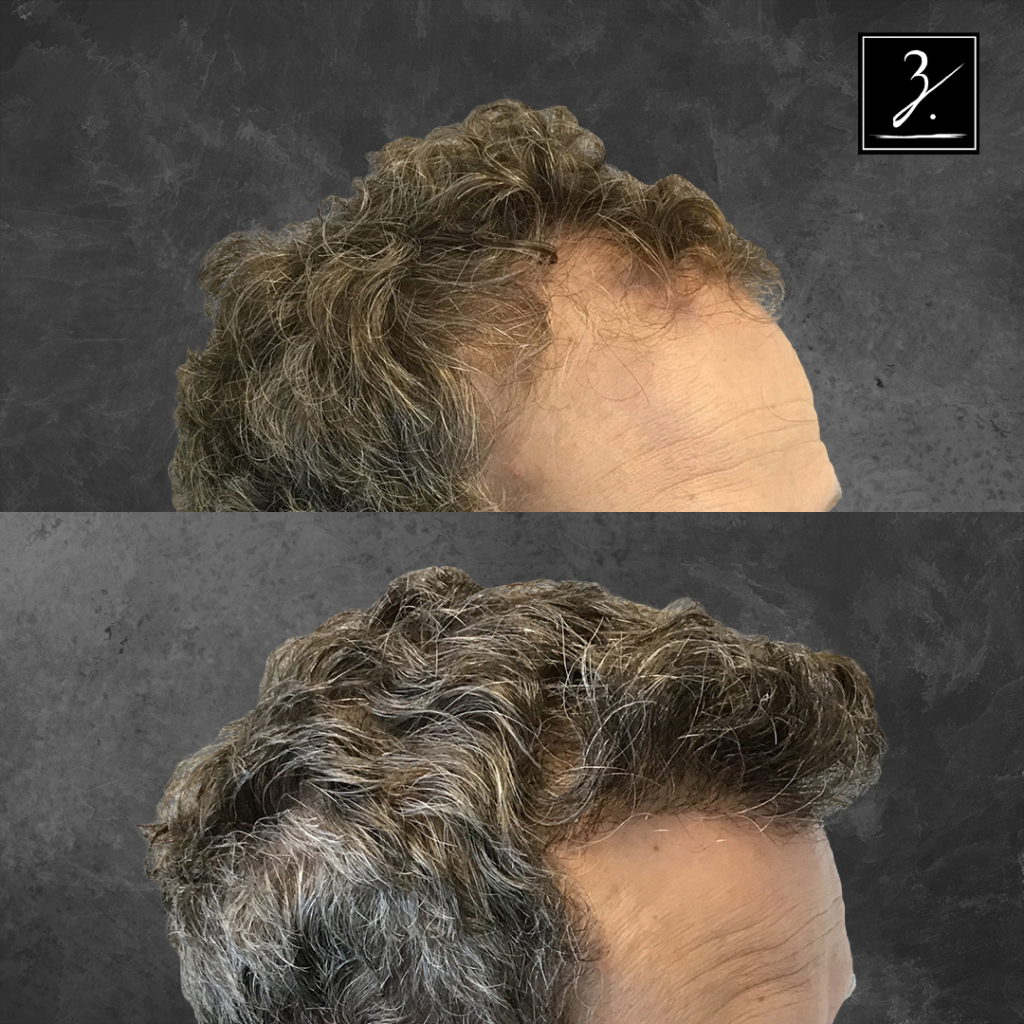
3,200 Follicular Units, 1 MDEE/FUT Hair Transplant, Showing Pre-Op Photos and 12 Months Post-Op
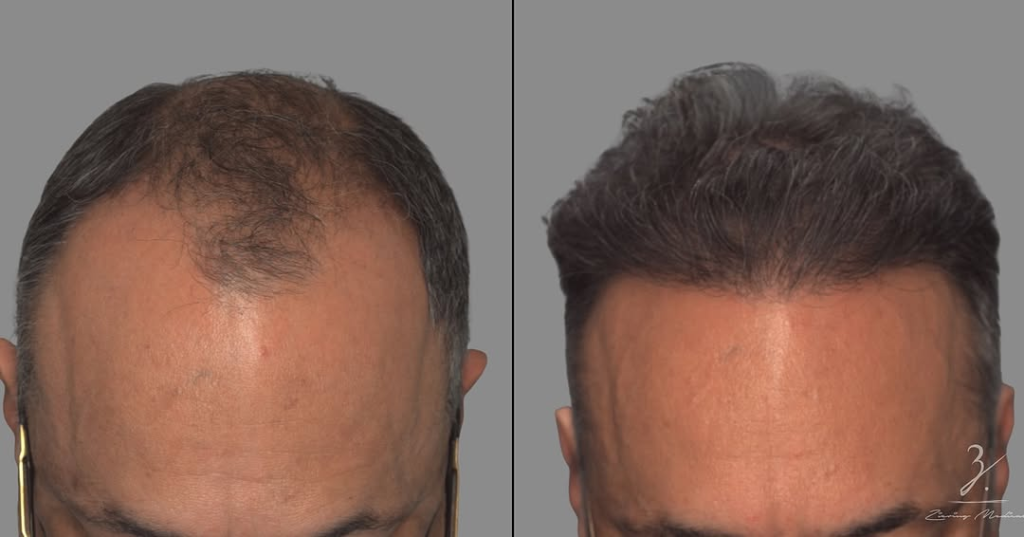
1922 Follicular Units, 1 MDEE/FUT Hair Transplant Showing Pre-Op and 18 Months Post-Op
Native Hair vs. Transplanted Hair
Many patients overlook the difference between transplanted hair and native hair. Transplanted follicles are permanent because they come from the DHT-resistant donor zone. Once healed, they continue to grow for life.
Native hair, however, is still vulnerable to thinning or loss especially if you are diagnosed with genetic or androgenetic hair loss. A hair transplant does not cure pattern baldness or androgenetic alopecia. If you don’t manage ongoing hair loss, the areas around your transplant can recede, leaving gaps or making your results look patchy.
This is why we often combine surgery with medical therapy such as finasteride, oral or topical minoxidil, exosome therapy, and the Ziering Laser Cap. These treatments protect existing hair, slow further loss, and help enhance your hair transplant results.
Will You Need a Second Hair Transplant?
A successful transplant gives permanent new hair in the treated areas, but that doesn’t mean one surgery guarantees lifelong coverage. If your native hair continues to thin, the transplant can begin to look isolated or unnatural over time. In these cases, a second procedure may be needed to restore balance.
Whether you’ll need another transplant depends on your age, the amount of hair loss present at the time of your first surgery, the extent of future hair loss, and whether you use treatments like finasteride, dutasteride, or minoxidil to preserve existing hair and your personal hair goals or desired aesthetic appearance. At Ziering Medical, we’ve helped thousands of patients regain a full head of hair with FUE and MDEE/FUT with a single hair transplant in their lifetime.
However, some patients may require touch-ups to cover new thinning areas. Planning with a skilled surgeon helps ensure your first procedure looks natural long term and preserves enough donor hair if future sessions are required.
Hair Transplant Risks and Poor Outcomes
While transplanted hairs are permanent by nature, poor surgical practices can undermine the result. Grafts that are damaged during extraction or placed incorrectly may never grow. Overharvesting from the donor area can leave visible thinning or scarring that can’t be reversed. A hairline that’s designed too low or at the wrong angle may look unnatural as you age, making permanence more of a problem than a benefit.
Complications are rare but possible. These include infection, scarring, or poor graft survival when unqualified technicians handle most of the procedure. Bad results can sometimes be corrected with repair surgery, but donor supply is limited, therefore every graft counts. Choosing an experienced, board-certified surgeon is the best way to reduce these risks and protect the long-term success of your transplant.
Is a Hair Transplant Safe?
When performed by a qualified, experienced surgeon like the Ziering surgeons, hair transplants are safe. The most common side effects are temporary swelling, redness, or mild discomfort. Serious risks like infection or poor graft survival are rare but increase significantly when the procedure is done by unqualified providers.
Patients should be cautious of several red flags when considering a hair transplant. If a clinic relies heavily on technicians to handle the hair transplant design, the donor harvest for either FUE or FUT and the recipient site creation, the risk of poor graft survival, scarring, and complications rises sharply.
Another warning sign is pushy sales tactics, such as steep discounts or “book now” promotions that pressure patients into making quick decisions. Consultations based only on photos or text messages are also problematic, since proper medical evaluation should include a review of your health and hair history along with knowing who your hair transplant surgeon will be.
Be wary of promises like “scar-free results” or “unlimited grafts,” as both FUE and MDEE/FUT procedures leave some degree of scarring and donor supply is always finite. Finally, a trustworthy clinic should provide authentic before-and-after results and a clear plan for follow-up care. If these are missing, it’s best to look elsewhere.
What to Do If You Already Had a Bad Hair Transplant?
A poorly performed hair transplant doesn’t have to be the final word. In some, but not all cases, results may be improved or corrected. A skilled surgeon can adjust an unnatural hairline, fill in areas of poor density, or redistribute grafts for a more natural look. Sometimes this involves adding new grafts, other times it may require removing or redistributing old ones.
Corrective procedures require an experienced surgeon, since donor supply is limited and every graft matters. If you’re unhappy with your previous transplant, consult our board-certified surgeons at Ziering Medical. We have a track record in revision cases and have helped many patients turn their disappointing outcomes into life-changing results.
Call us Ziering Medical to book a consultation today. We serve patients all over the greater Tri-state area of New York, New Jersey, and Connecticut, as well as the greater Southern California area from Los Angeles and Beverly Hills to Newport Beach and San Diego. We also offer consultations for patients in and around Salt Lake City and San Francisco.
Frequently Asked Questions
Do hair transplants last forever?
Yes. Transplanted hairs are permanent because they come from DHT-resistant areas, but surrounding native hair can still thin over time.
Can hair fall out again after a transplant?
The transplanted follicles won’t fall out permanently, but they go through a temporary shedding phase post-operatively before new growth begins.
Which is more permanent, FUE or FUT?
Both techniques produce permanent transplanted hairs. The main difference is in graft harvesting, scarring, donor management, session size, and recovery time.
How much is a hair transplant?
Costs vary widely depending on the number of grafts needed, the type of surgery selected, the clinic location, and the surgeon’s expertise. Our team will give you a detailed breakdown of the cost of your procedure during your consultation.